Home > News

Hammer drill or rotary hammer, which bit, how to avoid rebar and how to control silica dust: the four decisions that decide whether a concrete anchor hole goes in clean.

What Tools Do You Need to Drill into Concrete?

Nov. 23 , 2026

For a few small anchor holes, a hammer drill with a carbide-tipped concrete bit may be enough. For repeated holes, deeper holes, or hard poured concrete, start with an SDS-Plus rotary hammer and a matching carbide-tipped bit. Use the anchor manufacturer’s instructions to choose the hole diameter and depth, then check the drilling area for embedded objects and set up dust extraction.
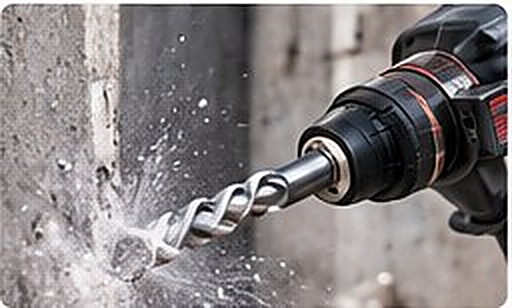
Worker using a rotary hammer to drill into concrete

Concrete Drilling Tool Checklist

  • Hammer drill or rotary hammer matched to the concrete, hole size, depth, and number of holes.
  • Carbide-tipped concrete bit with the shank your tool accepts and the diameter your anchor requires.
  • Measuring tape, marker, and depth stop to mark the hole and control how deep you drill.
  • Suitable concrete scanner or detector to check for reinforcement and concealed services before drilling.
  • Compatible dust shroud or extractor attachment connected to a dust collector suitable for concrete drilling.
  • Eye and hearing protection and any respiratory protection required by your site’s exposure assessment or local rules.

Hammer Drill or Rotary Hammer for Concrete?

A hammer drill, also called an impact drill, typically uses a mechanical percussion mechanism that delivers short blows along the bit as it turns. A rotary hammer typically uses a piston-driven mechanism to deliver higher-energy blows. That makes a rotary hammer a better starting point when the concrete is hard or the job involves drilling hole after hole.

MrPowerTools models by drilling task
Drilling taskModel to comparePublished specifications
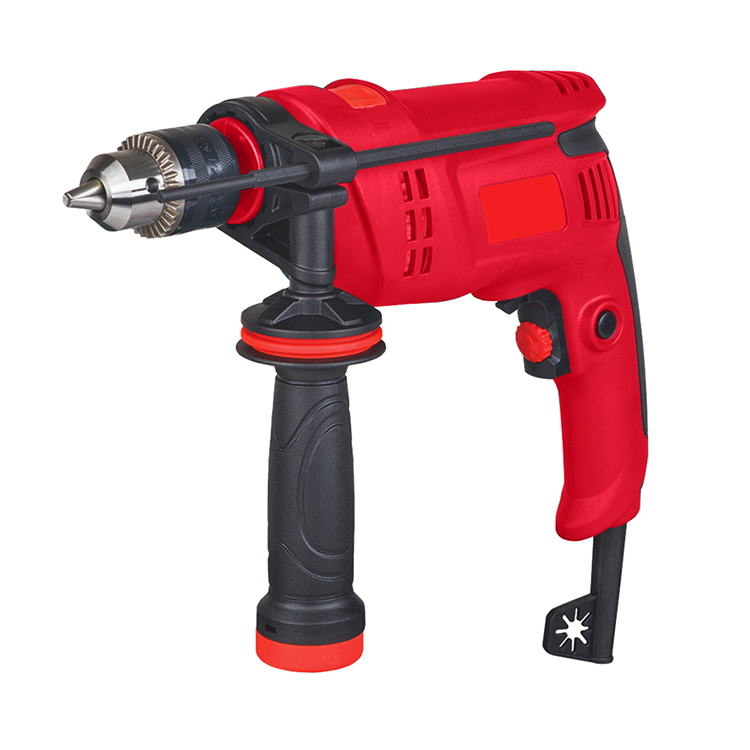
A few small, shallow holes in concrete that drills readily W31305 corded electric impact drill W31305 Electric Impact Drill 800 W, 13 mm maximum chuck capacity, 13 mm published concrete drilling capacity
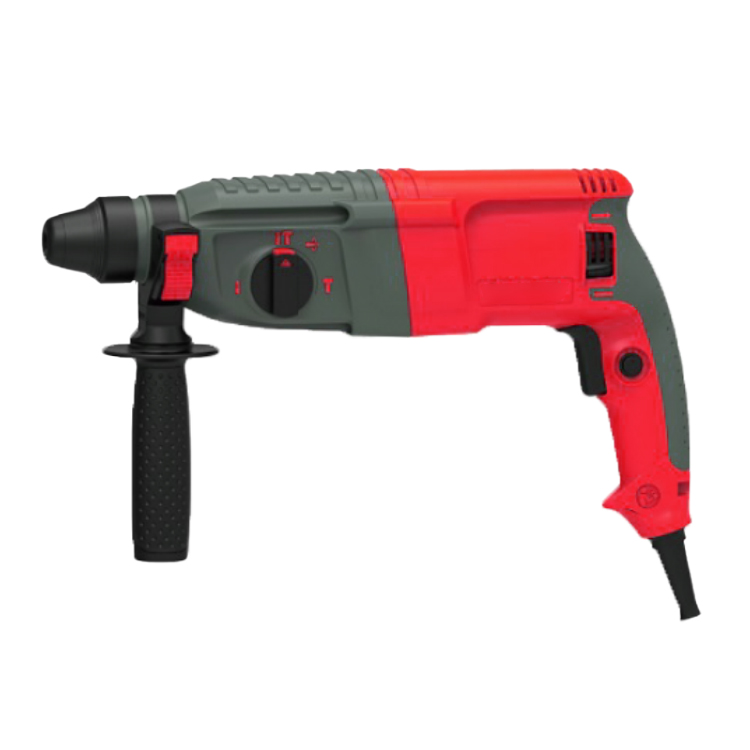
Repeated anchor holes or drilling into hard poured concrete W33107 SDS-Plus corded rotary hammer W33107 Electric Rotary Hammer 800 W, 2.8 J impact energy, SDS-Plus, 26 mm maximum concrete drilling diameter
Larger anchor holes where more drilling capacity is needed W33118 SDS-Plus corded rotary hammer W33118 Electric Rotary Hammer SDS-Plus, 32 mm maximum concrete drilling diameter

The W31305 and W33107 both list 800 W of input power, but their impact mechanisms, bit interfaces, and drilling capacities differ. For repeated work, compare the tools at the diameter and depth you use most often. The published maximum diameter is a capacity figure. For a large batch of holes, test the tool with the actual bit and base material to check how it performs.

How to Choose a Concrete Drill Bit

Start with the exact anchor or concrete screw you plan to install. Its installation instructions specify the drill bit diameter, hole depth, and hole-cleaning method. Some anchors require the hole to be deeper than the portion of the anchor embedded in the concrete. Use the specified hole depth to set your depth stop.

  • For a hammer drill with a standard chuck, choose a carbide-tipped bit rated for concrete and hammer drilling with a shank the chuck accepts.
  • For an SDS-Plus rotary hammer, choose a carbide-tipped SDS-Plus concrete bit with enough usable drilling length for the specified hole.
  • For an SDS-Max rotary hammer, choose a compatible SDS-Max bit. Check the interface on the tool and the bit before buying.

The same hole diameter can be available with several shank types, so check the shank and diameter separately.

How to Avoid Rebar and Hidden Utilities

Check available drawings and scan the proposed hole locations with equipment suitable for detecting the expected reinforcement, post-tensioning tendons, conduits, or pipes. If a scan is unclear or cannot verify what is in the drilling path, get the area checked before drilling.

If the bit stops advancing and you suspect it has hit steel or another embedded object, stop drilling and identify what is in the way. For a structural fixing, have the responsible engineer approve any change to the anchor location. Moving a hole can affect anchor spacing and edge distance.

How to Control Concrete Dust While Drilling

Concrete drilling can release respirable crystalline silica. Collect dust where the bit enters the concrete with a compatible shroud connected to a suitable dust collector. Check that the attachment fits the drill and bit, and follow the tool and extractor instructions for operation and maintenance.

For U.S. construction crews using OSHA’s Table 1 method for handheld drills, use a shroud or cowling with dust collection, at least the airflow recommended by the tool manufacturer, and a filter that is at least 99% efficient with a filter-cleaning mechanism. Table 1 also specifies a HEPA-filtered vacuum when cleaning holes. Follow the anchor maker’s approved hole-preparation procedure and the site’s dust-control requirements.

How to Drill a Concrete Anchor Hole

  1. Confirm the anchor and mark the hole. Check the specified diameter and depth, locate the fixing, and verify the drilling area before you start.
  2. Set up the drill. Fit the correct bit, set the depth stop if available, connect dust extraction, and select the drilling mode specified for the tool, bit, and anchor.
  3. Start slowly at the mark. Keep the bit aligned with the intended hole. Use the auxiliary handle if supplied and apply steady pressure in line with the bit. Stop if the bit binds or you suspect an obstruction.
  4. Check and clean the hole. Confirm the depth and prepare the hole according to the anchor instructions before installing the fixing.

Frequently Asked Questions

Can I drill into concrete with a regular drill?

A drill without hammer action may make a small, shallow hole in softer concrete with a suitable bit. Hard poured concrete and repeated anchor holes are better suited to a rotary hammer.

Can I use an impact driver to drill concrete anchor holes?

An impact driver is designed to turn fasteners with rotational impacts. For drilling the hole itself, use a hammer drill or rotary hammer with a compatible concrete bit. Impact driver vs. impact drill.

Can I use a demolition hammer to drill into concrete?

A standard demolition hammer delivers blows for breaking or chiseling. Choose a rotary hammer to drill anchor holes. Demolition hammer vs. rotary hammer.

  • Hebei Sinotools Industrial Co., LTD.

  • Add.: Shijiazhuang City, Hebei Province P.R.China
  • Postcode: 050051
  • Call us now: +86 311 8533 5186
  • Fax: +86 311 8533 1200
  • E-mail: info@mrpowertools.com
  • Afghanistan
  • Albania
  • Algeria
  • American Samoa
  • Andorra
  • Angola
  • Anguilla
  • Antarctica
  • Antigua and Barbuda
  • Argentina
  • Armenia
  • Aruba
  • Australia
  • Austria
  • Azerbaijan
  • Bahamas
  • Bahrain
  • Bangladesh
  • Barbados
  • Belarus
  • Belgium
  • Belize
  • Benin
  • Bermuda
  • Bhutan
  • Bolivia
  • Bosnia and Herzegovina
  • Botswana
  • Bouvet Island
  • Brazil
  • British Indian Ocean Territory
  • Brunei Darussalam
  • Bulgaria
  • Burkina Faso
  • Burundi
  • Cambodia
  • Cameroon
  • Canada
  • Cape Verde
  • Cayman Islands
  • Central African Republic
  • Chad
  • Chile
  • China
  • Christmas Island
  • Cocos (Keeling) Islands
  • Colombia
  • Comoros
  • Congo
  • Cook Islands
  • Costa Rica
  • Cote D'Ivoire
  • Croatia
  • Cuba
  • Cyprus
  • Czech Republic
  • Denmark
  • Djibouti
  • Dominica
  • East Timor
  • Ecuador
  • Egypt
  • El Salvador
  • Equatorial Guinea
  • Eritrea
  • Estonia
  • Ethiopia
  • Falkland Islands (Malvinas)
  • Faroe Islands
  • Fiji
  • Finland
  • France, Metropolitan
  • French Guiana
  • French Polynesia
  • Gabon
  • Gambia
  • Georgia
  • Germany
  • Ghana
  • Gibraltar
  • Greece
  • Greenland
  • Grenada
  • Guadeloupe
  • Guam
  • Guatemala
  • Guinea
  • Guinea-Bissau
  • Guyana
  • Haiti
  • Honduras
  • Hong Kong,China
  • Hungary
  • Iceland
  • India
  • Indonesia
  • Iran (Islamic Republic of)
  • Iraq
  • Ireland
  • Israel
  • Italy
  • Jamaica
  • Japan
  • Jordan
  • Kazakhstan
  • Kenya
  • Kiribati
  • North Korea
  • South Korea
  • Kuwait
  • Kyrgyzstan
  • Lao People's Democratic Republic
  • Latvia
  • Lebanon
  • Lesotho
  • Liberia
  • Libyan Arab Jamahiriya
  • Liechtenstein
  • Lithuania
  • Luxembourg
  • Macau
  • Madagascar
  • Malawi
  • Malaysia
  • Maldives
  • Mali
  • Malta
  • Marshall Islands
  • Martinique
  • Mauritania
  • Mauritius
  • Mayotte
  • Mexico
  • Micronesia
  • Moldova
  • Monaco
  • Mongolia
  • Montserrat
  • Morocco
  • Mozambique
  • Myanmar
  • Namibia
  • Nauru
  • Nepal
  • Netherlands
  • New Caledonia
  • New Zealand
  • Nicaragua
  • Niger
  • Nigeria
  • Niue
  • Norfolk Island
  • Northern Mariana Islands
  • Norway
  • Oman
  • Pakistan
  • Palau
  • Panama
  • Papua New Guinea
  • Paraguay
  • Peru
  • Philippines
  • Pitcairn
  • Poland
  • Portugal
  • Puerto Rico
  • Qatar
  • Reunion
  • Romania
  • Russian Federation
  • Rwanda
  • Saint Kitts and Nevis
  • Saint Lucia
  • Saint Vincent and the Grenadines
  • Samoa
  • San Marino
  • Saudi Arabia
  • Senegal
  • Seychelles
  • Sierra Leone
  • Singapore
  • Slovak Republic
  • Slovenia
  • Solomon Islands
  • Somalia
  • South Africa
  • Spain
  • Sri Lanka
  • St. Helena
  • Sudan
  • Suriname
  • Swaziland
  • Sweden
  • Switzerland
  • Syrian Arab Republic
  • Taiwan, China
  • Tajikistan
  • Tanzania
  • Thailand
  • Togo
  • Tokelau
  • Tonga
  • Trinidad and Tobago
  • Tunisia
  • Turkey
  • Turkmenistan
  • Turks and Caicos Islands
  • Tuvalu
  • Uganda
  • Ukraine
  • United Arab Emirates
  • United Kingdom
  • United States
  • Uruguay
  • Uzbekistan
  • Vanuatu
  • Vatican City State (Holy See)
  • Venezuela
  • Viet Nam
  • Virgin Islands (U.S.)
  • Wallis and Futuna Islands
  • Western Sahara
  • Yemen
  • Zambia
  • Zimbabwe
  • Montenegro
  • Serbia
  • Palestine
  • South Sudan
  • Jersey

Copyright © Sinotools Industrial All rights reserved. Technical Support:REANOD

TOP